


 By neha - June 23, 2026
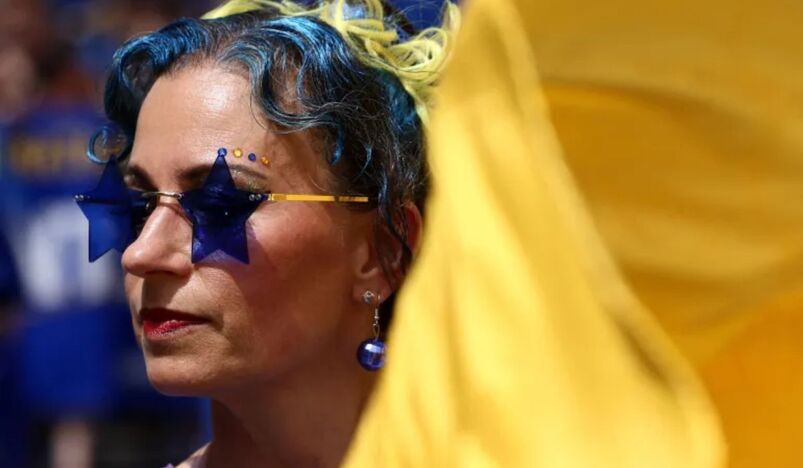
Ten years ago, Britons voted to leave the European Union. The debate promised economic freedom and border control. Today, most people agree the deal went badly. But the real damage runs deeper than trade figures or GDP charts.
Britain has paid a social and political price. That price compounds every year.
What the Numbers Actually Show
A YouGov survey conducted this month found that just 30 percent of Britons now believe leaving the EU was the right choice. That number was 64 percent when people cast their votes on June 23, 2016.
A clear majority of 57 percent now think leaving was wrong. Six in ten judge Brexit an outright failure.
A recent Bank of England analysis indicates the UK economy has shrunk by 6 percent due to the effects of the departure. Many economists no longer dispute this figure.
Brexit has morphed into what commentators now call "Bregret."
Seven Prime Ministers in Ten Years
As Keir Starmer resigns, Britain is set to see its seventh prime minister in a decade. That revolving door started spinning the moment David Cameron walked away after the 2016 result.
The current political instability has its roots in the spiral that Brexit unleashed. No government since has managed to steady the ship.
Borders Became a Moral Argument
The referendum was sold partly as a question of sovereignty. But it quickly became something else.
By turning a complex question of EU membership into a vote on controlling borders, pro-Brexit campaigners infused the politics of migration with a moral charge.
Tahir Abbas, director of the Centre on Radicalisation, Inclusion and Social Equity at Aston University, points to something specific. He says Brexit mobilised Islamophobia, particularly through Nigel Farage's infamous poster showing tens of thousands of brown-skinned people seemingly moving toward the UK.
That image became a rallying point. It worked.
Extreme Language Moved to the Centre
Words that once ended political careers now open them.
Rhetoric that once sat at the fringe — that the country is being "invaded," that asylum is a racket, that minorities such as Muslims do not share "British values" — has moved steadily toward the centre of acceptable debate.
Policy followed the language.
Successive governments competed to out-toughen one another on immigration: offshore processing, threats to leave the European Convention on Human Rights, and schemes to deport asylum seekers to third countries that courts have found unlawful.
Measures once regarded as unacceptable — detention of migrants without defined limits and the criminalisation of rescue operations at sea — have been normalised under the guise of border control.
From Words to Violence
The language eventually spilled into the streets.
A week before the 2016 referendum, a 53-year-old man killed Labour MP Jo Cox, a mother of two, in northern England. Thomas Mair shouted "Britain first" and "This is for Britain" as he shot and stabbed her to death.
The pattern did not stop there.
In the Belfast riots in June 2026, masked crowds moved through the city for several nights after a knife attack by a Sudanese national. They torched homes, businesses, and vehicles and went door-to-door trying to identify houses occupied by immigrants.
A group of volunteer monitors had warned the Police Service of Northern Ireland eight months earlier about a hit list prepared by anti-immigration activists. The properties on that list were the same ones targeted during the riots.
British Muslims Carry the Heaviest Burden
The burden of lived experiences of exclusion and racism falls most heavily on Britain's Muslims, especially women who wear clothing that identifies their faith.
Discrimination on the street makes no distinction between a third-generation British Muslim doctor, an EU citizen of colour, and an undocumented migrant vilified by tabloid media.
British Muslims face a double-edged sword of prejudice against both their ethnicity and their faith.
Nichola Khan, an anthropologist and migration expert at the University of Edinburgh, warns that cultural diversity — a treasured British value — now faces risks of erasure.
Disinformation Found Its Business Model
Brexit did not just change politics. It changed how politics is fought.
The "leave" campaign's victory vindicated new approaches to information communication. It proved that technology and data could bypass the old gatekeepers of traditional media, vote banks, and community champions.
Amil Khan, head of Valent, an organisation that studies disinformation, says a new generation of strategists entered the market after 2016. They were younger, more tech-savvy, and less rule-bound than the generation before them.
This gave rise to new actors offering services such as bot farms, which have increased their capacity to spread disinformation — a problem that advances in artificial intelligence could make significantly worse.
What Comes Next
The UK's economic troubles will continue to force deliberations about how Britain should align with the EU. Sovereignty and immigration remain contentious in public discourse. A resurgent Reform UK party under Farage stands ready to brand any concession a betrayal.
The deeper problem is harder to fix than a trade deal.
Ten years of centring migration as the master key to all societal grievances has coarsened the discourse, normalised extremes, and put families of non-white backgrounds — particularly British Muslims — increasingly in harm's way.
If this trajectory is not corrected, Britain will need more than a healthy economy to repair trust among its citizens.
_20-08-2026_05-08.jpg)
_27-51-2026_11-51.png)
_27-43-2026_12-43.png)


.jpg)
.jpg)



.jpg)


.jpg)
.png)
.jpg)









Leave a comment